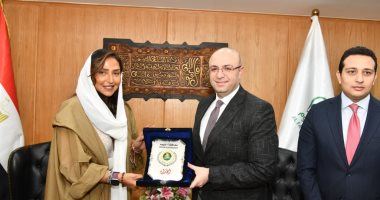
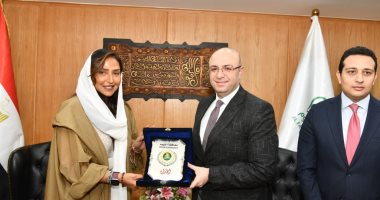
Fayoum Governor Receives Princess Lamia bint Majed Al Saud
28 April 2026Dr. Mohamed Hani Ghoneim, Governor of Fayoum, received Her Royal Highness Princess Lamia bint Majed Al Saud, Secretary-General of Alwaleed Philanthropies, during her visit to Fayoum Governorate. The visit took place as part of the launch of the ninth phase of the “Sotra” project, which continues the strategic cooperation between the global Alwaleed Philanthropies and Misr El Kheir Foundation. The project aims to improve housing conditions by rehabilitating, renovating, and roofing homes for the most vulnerable families, in cooperation with the Ministries of Social Solidarity, Housing, Local Development, and Environment.
The meeting was attended by Dr. Mohamed El-Touni, Deputy Governor; Eng. Amal Mobbada, Executive Director of Resource Development at Misr El Kheir Foundation; and Walid Kotb, Director of the Foundation’s Fayoum office.
Visit Details
The visit included a field tour by representatives of both foundations to inspect a number of targeted homes in Tersa village in Fayoum, in preparation for development and upgrading work. This will help improve the quality of life for eligible families. The ninth phase of the “Sotra” project includes upgrading 200 homes in the villages of Tersa, Qalamshah, Dafno, Al-Salam, Ghaidan, and Hawarat Al-Maqta in Fayoum Governorate.
Governor Ghoneim highlighted the deep relations and strong historical ties between Egypt and Saudi Arabia. He noted that the “Sotra” project, implemented in cooperation between Alwaleed Philanthropies and Misr El Kheir, is a true embodiment of sustainable development focused primarily on people. It also represents a model of integration between government executive bodies and civil society organizations in providing a decent life for citizens, especially in the most vulnerable areas, in line with the political leadership’s direction to develop rural Egypt and support civil society efforts.
He added that the project goes beyond simply restoring walls—it builds a better future for these families by providing safe and healthy housing. He affirmed the governorate’s readiness to provide all facilities and logistical support to ensure high-quality and timely implementation, praising the developmental role played by Alwaleed Philanthropies globally and Misr El Kheir locally.
Ghoneim also pointed out that Egypt is moving steadily toward improving service governance and expanding digitalization to ensure that support reaches those who deserve it and that services are delivered more efficiently. He stressed the importance of equipping youth with enlightened thinking and critical skills to confront destructive ideas, misinformation, and rumors.
Princess Lamia bint Majed Al Saud, Secretary-General of Alwaleed Philanthropies, said:
“At Alwaleed Philanthropies, we believe that adequate housing is the cornerstone of a dignified life. Through our long-standing partnership with Misr El Kheir in the ‘Sotra’ project, we work to empower the most vulnerable families to live in a safe environment that preserves their dignity and offers them a chance for a better life. This approach supports a shared vision for humanitarian work, focusing on improving quality of life and delivering meaningful development impact.”
Meanwhile, Eng. Amal Mobadda , Executive Director of Resource Development at Misr El Kheir Foundation, stated that the “Sotra” project is one of the most prominent successful development partnership models. Since its launch in 2017, it has improved housing conditions for more than 7,200 homes across various governorates, as part of a plan to develop 10,000 homes over 10 years.
She explained that the ninth phase builds on this success, targeting the rehabilitation of 600 to 700 homes across four governorates: Fayoum, Beni Suef, Minya, and Assiut—reflecting the continued expansion of the foundation’s development efforts. She noted that the partnership with Alwaleed Philanthropies represents an effective model of international cooperation in civil society work, enhancing development impact and ensuring project sustainability, especially in the housing improvement sector.
She added that conducting field visits before starting development work is essential to accurately identify the real needs of eligible families, ensuring comprehensive interventions that achieve the highest levels of quality and efficiency.
البوم الصور



.png)
.png)
.png)
.png)
