“Misr El Kheir,” FAO, and 80 civil society organizations discuss the future of food security in Near East and North Africa
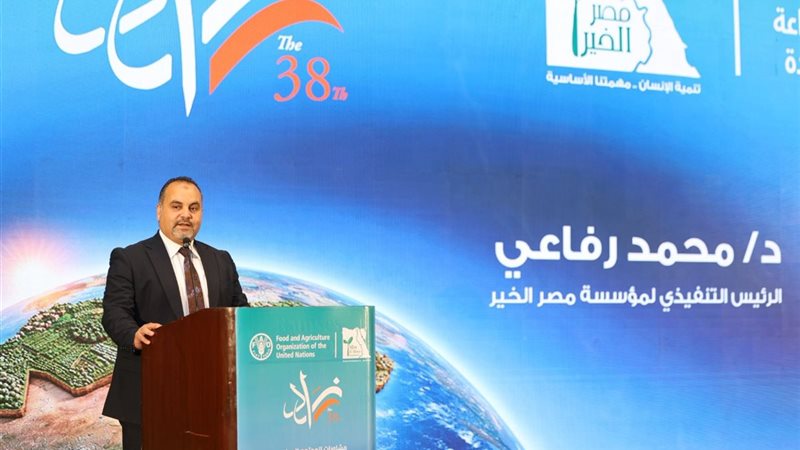
20 April 2026Misr El Kheir Foundation, in partnership with the Food and Agriculture Organization of the United Nations (FAO), organized civil society consultation meetings in preparation for the 38th session of the Regional Conference for the Near East and North Africa. Around 80 civil society organizations from across the region participated, as part of efforts to support the role of civil society in shaping policies related to agricultural and food systems.
Dr. Mohamed Refai, CEO of Misr El Kheir Foundation, emphasized the importance of partnership with the FAO in empowering civil society to actively contribute to achieving sustainable development. He noted that the right to sustainable food is a fundamental human right.
He explained that ongoing cooperation with the international organization is based on respecting diverse perspectives during consultation meetings, helping translate outcomes into practical, actionable initiatives on the ground. He added that ensuring sustainable access to food is a cornerstone for achieving stability and peace in the region.
Refai also pointed out that these consultations serve as a unifying regional platform to strengthen the participation of civil society organizations in building a shared vision capable of addressing food security challenges, environmental sustainability, and the development of agricultural and food systems in the region.
Dr. Abdelhakim El Waer, FAO Assistant Director-General and Regional Representative for the Near East and North Africa, stated that these consultations come as part of preparations for the 38th session of the region’s Conference of Ministers of Agriculture, amid escalating challenges including climate change, water scarcity, population growth, and protracted crises.
He explained that the region faces additional challenges due to ongoing conflicts, leading to declining production and rising prices. He stressed that transforming agricultural and food systems is no longer optional but an urgent necessity, requiring effective partnerships among governments, international organizations, the private sector, and civil society.
He added that despite all these challenges, the region holds significant opportunities that can be leveraged to build more resilient agricultural systems capable of meeting the needs of current and future generations.
Dr. Mohamed Bouanani, representative of the Moroccan delegation on the conference’s steering committee, stressed the importance of these consultations in current global conditions, calling for stronger active participation as a necessity to confront challenges and support development pathways.
Dr. Mohamed Mamdouh, Head of the Civil Associations Sector at Misr El Kheir Foundation, explained that many countries in the region face increasing pressures due to climate change, land degradation, scarcity of natural resources, supply chain disruptions, and rising food insecurity.
He noted that economic crises and conflicts have further weakened food systems, making it essential to adopt an integrated approach to transition toward more sustainable and resilient systems, in line with the FAO’s strategic framework based on the “Better Four.” Strategy .
He affirmed that civil society organizations are key partners in supporting agricultural development, empowering smallholder farmers, and conveying expertise to decision-makers. He stressed that these consultations help build shared visions and practical recommendations to support the regional conference’s deliberations.
The event concluded with an emphasis on the importance of strengthening regional cooperation and building sustainable networks and partnerships among civil society organizations, to support the transition toward more inclusive, sustainable, and resilient agricultural and food systems capable of addressing future challenges.



.png)
.png)
.png)
.png)
