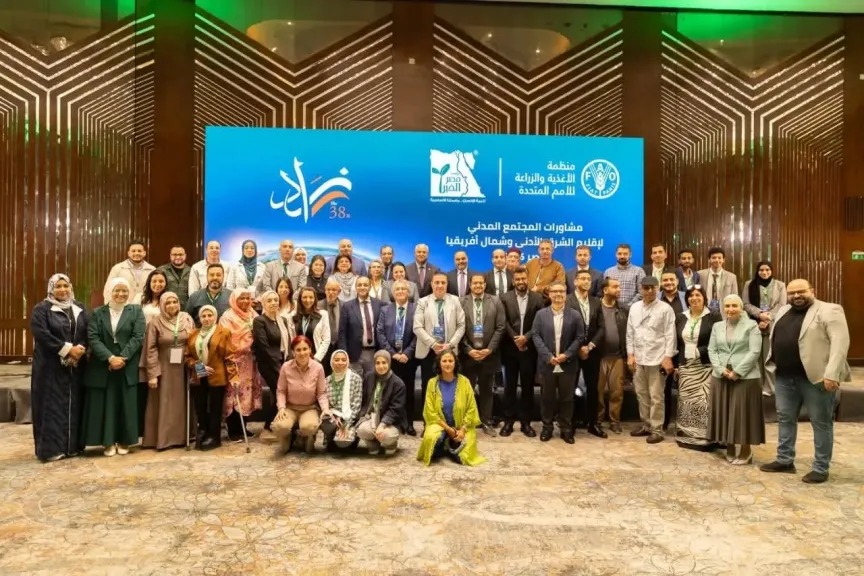
Misr El Kheir Foundation leads regional consultations to strengthen food security and reform agricultural systems in the Near East and North Africa
20 April 2026Misr El Kheir Foundation, a member of the National Alliance for Civil Development Work, organized— in partnership with the Food and Agriculture Organization of the United Nations—civil society consultation meetings in preparation for the 38th session of the Regional Conference for the Near East and North Africa. Around 80 civil society organizations from across the region participated, as part of efforts to support the role of civil society in shaping policies related to agricultural and food systems.
Participants—including representatives of civil society organizations, agricultural groups, cooperatives, women’s and youth organizations, as well as academic and research institutions and regional and international partners—emphasized that reforming agricultural and food systems in the region has become an urgent developmental and strategic priority. This comes amid growing challenges related to climate change, economic and water pressures, and disruptions in supply chains.
The consultations, held over two days in Cairo, addressed several key issues, including climate action and combating desertification, sustainable water resource management, irrigation governance, the vulnerability of agricultural and food systems amid prolonged crises, as well as empowering women, youth, and smallholder farmers, and strengthening agricultural value chains.
The consultations resulted in the launch of the “Cairo 38 Declaration,” which includes a set of recommendations directed at governments, the private sector, civil society, and international organizations, reflecting a comprehensive vision to enhance the sustainability of agricultural systems and achieve food security in the region.
Key recommendations:
The recommendations called on governments to develop national strategies for agricultural adaptation, establish data systems and early warning mechanisms to address desertification and climate change, and enhance the participation of local communities in managing natural resources. They also emphasized strengthening regional cooperation, providing joint financing mechanisms for the agricultural sector, investing in rural infrastructure, and reducing food loss.
The private sector was urged to expand investment in irrigation technologies and climate-smart agriculture, provide accessible agricultural financing and insurance tools for the most vulnerable groups, develop supply chains and storage systems, support small enterprises and connect them to markets, and commit to fair practices that ensure market stability.
Regarding the role of civil society, the recommendations stressed the importance of supporting food banks and community agriculture, training communities to adapt to climate change, empowering women and youth through productive projects, strengthening cooperative marketing mechanisms, and monitoring the fair distribution of resources and aid.
The recommendations also called on international organizations to direct climate financing more directly and flexibly to local communities, support regional anti-desertification projects, provide climate data and early warning systems, transfer appropriate agricultural and water technologies, and support the transition from relief efforts to long-term sustainable development.
The “Cairo 38 Declaration” reflects a growing regional consensus on the importance of empowering civil society to actively contribute to shaping agricultural and food policies, enhancing communities’ ability to address challenges and achieve sustainable food security.
This comes within the broader efforts of institutions within the National Alliance for Civil Development Work to strengthen the role of civil society, support development initiatives, and expand community participation in vital issues, contributing to achieving sustainable development goals at both regional and international levels.



.png)
.png)
.png)
.png)
